O-Ring Materials Guide: Pros, Cons and Common Applications
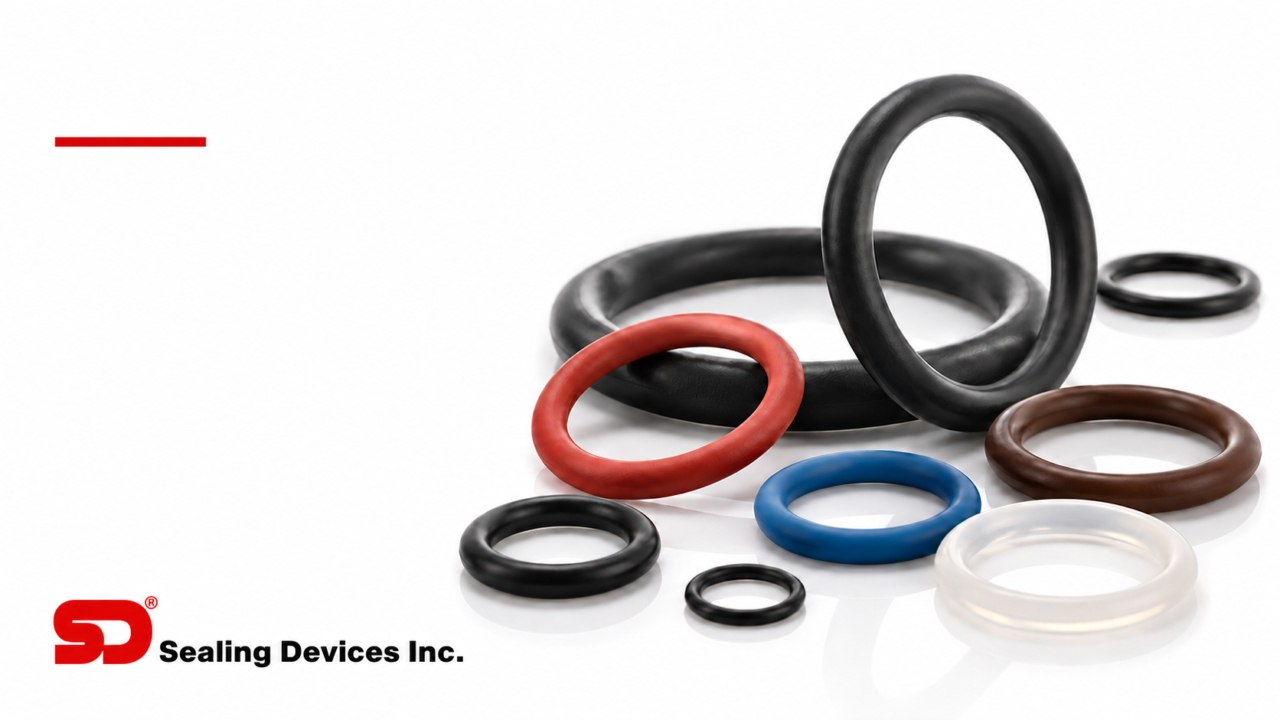
Choosing an O-ring material starts with the fluids, temperatures, and operating conditions the seal will face. Nitrile is a common starting point for petroleum oils, EPDM for water and steam, and FKM for many hotter oil and fuel applications. Silicone and fluorosilicone offer useful flexibility in cold conditions, while AFLAS® and FFKM address specific chemical and thermal demands.
Those differences matter even when two O-rings have identical dimensions. A material that performs well in a fuel system may be unsuitable for a water circuit, cleaning process, or moving seal.
Incompatible fluids can attack an elastomer, causing swelling, deterioration or early compression set. Comparing material advantages and limitations before specifying the seal can help prevent those problems.
Sealing Devices offers O-rings in a range of materials, including Buna-N nitrile, EPDM, neoprene, silicone, fluorosilicone, FKM, AFLAS and FFKM. This guide compares the advantages, limitations, and common applications of these eight material families to help engineers, buyers, and maintenance teams narrow their options.
O-Ring Material Comparison
| O-ring material | Main advantages | Key limitations | Common applications to evaluate |
|---|---|---|---|
| Buna-N nitrile (NBR) | Petroleum oil resistance, wear resistance and economical cost | Ozone, weathering, and several polar solvents | Oil-lubricated equipment, hydraulic components and gearboxes |
| Ethylene propylene (EPDM) | Water, steam, ozone and weather resistance | Petroleum oils, greases and fuels | Water-handling equipment, compatible coolant circuits and outdoor seals |
| Neoprene (CR) | Balanced weather resistance and compatibility with selected oils and refrigerants | Limited compatibility with aromatic hydrocarbons and polar solvents | Selected refrigeration systems and outdoor equipment |
| Silicone (VMQ) | Temperature flexibility and resistance to ozone and aging | Low tear and abrasion resistance; relatively high gas permeability | Static environmental seals and equipment housings |
| Fluorosilicone (FVMQ) | Cold flexibility with improved fuel and oil resistance compared with silicone | Limited toughness and wear resistance | Static aerospace fuel-system seals and cold fuel-exposure applications |
| Fluorocarbon (FKM), including Viton® options | Heat resistance and resistance to many oils and fuels | Conventional grades have cold-temperature and chemical limitations | Fuel-handling equipment and hot oil-exposed pumps and valves |
| AFLAS® (FEPM) | Resistance to steam, amines, bases, and selected additive-containing oils | Cold sealing performance needs particular attention | Steam-exposed equipment, chemical service and engine-fluid systems |
| Perfluoroelastomer (FFKM) | Very broad chemical resistance and high-temperature capability | Higher cost; performance remains compound-specific | Chemical processing, semiconductor equipment and critical process seals |
These comparisons are starting points for material selection. Confirm the exact compound against the full service conditions before specifying a seal.
Advantages, Limitations and Uses of Each O-Ring Material
Buna-N Nitrile O-Rings (NBR)
Nitrile O-rings, also called Buna-N or NBR, are widely used for economical sealing in equipment exposed to petroleum-based oils.
Advantages: NBR combines oil resistance with useful mechanical strength and abrasion resistance. It can be a practical choice for both static seals and appropriately designed moving seals.
Limitations: Standard nitrile has limited resistance to ozone, sunlight and weathering. Ketones and glycol-based brake fluids also require a different material choice. Fuel compatibility must be checked against the actual formulation.
Common use cases: Hydraulic components using compatible petroleum fluids, oil-lubricated machinery, gearboxes and industrial pumps. Consider the outdoor exposure and operating temperature before making NBR the default replacement material.
EPDM O-Rings
EPDM O-rings are useful where the seal encounters water, steam, ozone or outdoor weathering.
Advantages: EPDM offers strong resistance to hot water, aging and many compatible water-based fluids. Selected compounds are also suitable for specified brake fluids or phosphate ester hydraulic fluids.
Limitations: EPDM is generally unsuitable for petroleum oils, greases and fuels. That includes checking the lubricant used during installation. Steam temperature, coolant additives and cleaning chemistry must match the compound.
Common use cases: Water-handling equipment, compatible glycol coolant circuits, steam-exposed components and environmental seals in outdoor energy-storage equipment. Weather sealing and direct battery-electrolyte contact are separate requirements. For drinking-water or other regulated applications, request the required documentation for the specific compound.
Neoprene O-Rings (CR)
Neoprene O-rings, also known as chloroprene or CR O-rings, provide a balance of environmental resistance and compatibility with selected fluids.
Advantages: Neoprene resists ozone and weathering better than standard nitrile. It also works with certain oils, greases and refrigerants.
Limitations: Oil resistance varies with the oil chemistry. Aromatic and chlorinated hydrocarbons, ketones and other polar solvents can rule out CR. A refrigeration application must be checked against both the refrigerant and its lubricant.
Common use cases: Selected refrigeration and cooling systems, cable seals, and outdoor marine or transportation-equipment housings requiring a balance of weather resistance and fluid compatibility.
Silicone O-Rings (VMQ)
Silicone O-rings are often selected for static sealing where temperature flexibility and environmental resistance matter.
Advantages: Silicone offers good flexibility in cold conditions, useful dry-heat performance, and resistance to ozone, sunlight and aging. Suitable compounds can also provide low compression set.
Limitations: Silicone has relatively low tear strength and abrasion resistance, which limits its use in moving seals. Its comparatively high gas permeability can also matter when gas retention is critical. Fuel exposure requires careful review.
Common use cases: Static seals in electronics and communications housings, battery-system enclosures and equipment exposed to temperature changes. Food, medical, and pharmaceutical applications require a well-documented compound.
Fluorosilicone O-Rings (FVMQ)
Fluorosilicone O-rings combine useful cold flexibility with better resistance to fuels and mineral oils than conventional silicone.
Advantages: FVMQ is a candidate when a static seal must remain flexible in cold conditions while encountering compatible fuels or oils.
Limitations: Fluorosilicone has limited toughness and wear resistance, making it generally better suited to static service than repeated sliding or rotary motion. It usually costs more than standard silicone. Check the compound carefully for ketones, brake fluids, and other incompatible media, as well as its actual temperature limits.
Common use cases: Static aerospace fuel-system seals and equipment exposed to fuel and cold temperatures. Aerospace qualifications apply to specific compounds and specifications, rather than the entire material family.
FKM O-Rings and Viton® Options
FKM O-rings are fluorocarbon elastomer seals used where heat, oils, and fuels challenge general-purpose materials. Viton® is a brand associated with FKM materials.
Advantages: Many FKM compounds provide strong resistance to petroleum oils, fuels, ozone, and elevated temperatures. Low gas permeability can also be useful.
Limitations: Conventional FKM grades have restricted cold flexibility and generally cost more than standard nitrile. Many ketones, amines and phosphate ester hydraulic fluids are unsuitable for standard compounds. Specialty formulations, including low-temperature grades, can change performance and cost, so the exact grade matters.
Common use cases: Fuel-handling equipment, oil-exposed pumps and valves, and industrial, aerospace or defense components requiring a qualified heat-resistant compound.
AFLAS® O-Rings (FEPM)
AFLAS O-rings use tetrafluoroethylene-propylene elastomer, commonly designated FEPM, for demanding fluid and chemical exposures.
Advantages: AFLAS offers resistance to steam, hot water, amines and bases. Its compatibility with certain oils containing amine additives can make it useful where conventional FKM is unsuitable.
Limitations: Low-temperature sealing needs particular attention because cold brittleness and the ability to maintain an elastic seal are different properties. AFLAS can cost more than common elastomers, and compound and size availability should be confirmed early. Broad chemical resistance does not mean compatibility with every solvent.
Common use cases: Steam-exposed pumps and valves, chemical-processing equipment, selected semiconductor-process equipment, and systems handling compatible engine oils or other additive-containing fluids. Match each process chemical and cleanliness requirement to the specific compound.
FFKM O-Rings
FFKM O-rings are perfluoroelastomer seals used in demanding chemical and high-temperature applications. Options include specialized product families such as Kalrez®.
Advantages: FFKM offers very broad chemical resistance and high-temperature capability. Selected formulations address purity, outgassing or compression set requirements in critical processes.
Limitations: FFKM costs more than common elastomers. Chemical compatibility and temperature ratings still vary by compound, and some fluorinated solvents can cause swelling. Thermal expansion must also be considered in the gland design.
Common use cases: Semiconductor equipment, chemical-processing pumps and valves, and critical process seals where downtime, contamination or frequent replacement can justify the higher initial cost.
When to Consider Custom O-Rings
Custom O-rings are a size, design, or manufacturing option that can use different material families. Consider them when a standard ring does not meet the application's dimensions or performance requirements.
Advantages: Custom options allow the dimensions and compound to be matched to a specific gland or application.
Limitations: Tooling, development, and production costs can be higher than for available standard parts. Lead time depends on the design and manufacturing approach. Provide complete specifications and a plan for validation.
Common use cases: Nonstandard diameters or cross sections, retrofit equipment, prototypes and specialized assemblies where standard sizes cannot provide the required fit.
How to Choose an O-Ring Material for Your Application
A material family identifies the base polymer. A compound is the specific formulation, including its cure system, fillers, additives and hardness. Two O-rings labeled FKM or EPDM can have different service limits.
Before selecting a compound, gather the following information:
- Every fluid and gas the seal will contact. Include concentrations, cleaning agents, lubricants, and occasional exposures as well as the normal process fluid.
- The full temperature cycle. Document cold starts, normal operation, short peaks, and cleaning conditions. Confirm continuous and intermittent limits for the exact compound in the actual fluid.
- Pressure and seal movement. Identify static, reciprocating, or rotary service. Pressure, clearances, hardness, and possible backup-ring requirements must be evaluated together.
- Dimensions and gland design. Confirm the inside diameter, cross section, groove dimensions and tolerances. Our O-ring size chart can help identify standard dimensions.
- Documentation and purchasing requirements. Specify required approvals, traceability, cleanliness, quantity, and delivery needs. Request documentation for the actual compound rather than assuming an entire material family meets a requirement.
Use manufacturer compatibility information to narrow the options, then validate the selected compound under representative service conditions. A broad material description cannot replace compound-specific data or application testing.
Frequently Asked Questions About O-Ring Materials
What is the difference between NBR and EPDM O-rings?
NBR is commonly selected for petroleum oil exposure, while EPDM is commonly selected for water, steam, and weather resistance. EPDM is generally unsuitable for petroleum oils and fuels, so these materials should not be interchanged based on size alone.
What is the difference between FKM and FFKM O-rings?
FKM is a fluorocarbon elastomer used for many oil, fuel and elevated-temperature applications. FFKM is a perfluoroelastomer offering broader chemical resistance and higher-temperature options at a higher cost. The right choice depends on the exact chemicals, compound, and operating conditions.
When should fluorosilicone be considered instead of silicone?
Consider fluorosilicone when a static seal needs cold flexibility along with resistance to compatible fuels or oils. Conventional silicone can be useful for static environmental sealing and dry heat, but fuel exposure may require another material. Both materials have wear limitations.
Which O-ring material is best for high temperatures?
There is no single answer without knowing the fluid and duty cycle. Silicone can suit static dry-heat applications; FKM suits many hot oil and fuel environments; AFLAS addresses selected steam and chemical exposures; and FFKM offers high-temperature options for aggressive processes. Compare specific compound ratings.
Get Help Selecting Your O-Ring Material
Sealing Devices helps customers evaluate materials, sizes and sealing requirements with applications engineering support and access to leading O-ring suppliers.
Share your drawing or part number, fluid exposure, temperature range, pressure and seal movement with our team. We can help narrow the material options and identify a compound for evaluation, whether you need a standard size or a custom O-ring solution.
Contact Sealing Devices to discuss your O-ring application.
For additional selection and design information, explore our O-Ring Selection & Application Guide.
Technical References
- Sealing Devices O-Ring Selection & Application Guide, Section 2, Material Considerations, pages 5-11.
- Parker O-Ring Handbook for elastomer properties, compatibility, and seal-design considerations.
- AGC AFLAS FEPM functions and features for chemical resistance and low-temperature considerations.
- Sealing Devices guide to FFKM O-rings for additional FFKM advantages, limitations, and application considerations.
Related Products
We have the inventory to provide the right solution for your needs, no matter the application. Explore our industry-leading seal and gasket solutions to find the ideal product for you.
Related Industries
Sealing Devices proudly supports a wide range of critical industries. We keep the world safe and running smoothly with products designed to solve complex challenges.



Related Resources
Explore our guides, blogs, and more to learn more about our industry-leading sealing solutions.



Start the Conversation