
When you source sealed enclosures, housings, protective cases, or rugged electronics assemblies, you’re not just buying parts—you’re buying outcomes: fewer failures, fewer returns, and fewer surprises after launch.
One of the most common (and expensive) surprises is what happens even when an enclosure is “sealed.” Temperature swings, altitude changes during shipping, and washdowns can create pressure differentials and trapped moisture inside the enclosure. Over time, those conditions can stress seals and contribute to leaks, condensation, and premature failures.
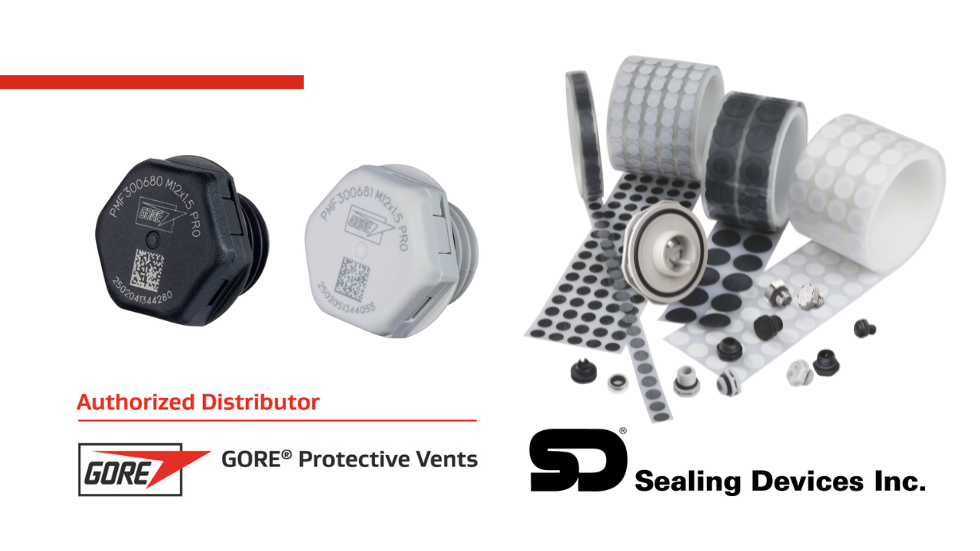
That’s where GORE® Protective Vents come in. They’re designed to help equalize pressure while maintaining environmental protection—supporting reliability and lowering total cost of ownership.
Why procurement should care about venting (even if you’re not the engineer)
From a procurement perspective, venting is less about membrane technology and more about what it prevents:
- Warranty claims tied to moisture and corrosion
- Returns caused by intermittent electronics issues
- Rework and redesign after validation testing
- Supplier churn and “fire drills” late in the program lifecycle
- Over-engineering (extra gaskets/fasteners) used to compensate for pressure swings
A vent is often a small line item that can reduce big downstream costs.
The business problems protective vents help prevent
1) Pressure differentials that stress seals and increase leak risk
Sealed enclosures experience pressure changes constantly—daily temperature cycling, altitude changes during shipping, and real-world operating conditions. Those pressure shifts can strain seals and create new leak paths over time. A protective vent helps relieve that stress by allowing pressure equalization.
Procurement impact: fewer seal-related issues, more stable field performance, and reduced program risk.
2) Condensation that leads to corrosion and field failures
Condensation is a common root cause of electronics failures—especially in outdoor or high-humidity environments. Protective vents can help reduce trapped moisture and support more consistent enclosure performance over time.
Procurement impact: reduced exposure to returns and repair costs tied to moisture-related failures.
3) Contaminants that shorten product life
Beyond water, many applications face dust, dirt, salts, industrial grime, and chemical exposure. Protective vents are available in different protection styles depending on what the enclosure will encounter—including environments where oils, cleaners, or other low-surface-tension fluids may be present.
Procurement impact: better durability in real-world conditions and fewer “unknowns” after deployment.
Will a vent compromise enclosure protection?
This is one of the most common buyer concerns. The right protective vent is selected based on your environment and protection requirements. Many vent options are designed to maintain ingress protection while still allowing pressure equalization—so you’re not choosing between “sealed” and “vented.” You’re often choosing whether the enclosure can stay sealed and survive real-world pressure cycling long-term.
What you’re really buying: lower total cost and fewer surprises
Protective vents can reduce total program cost by helping avoid:
- Early-life failures and warranty exposure
- Added assembly complexity (extra gaskets/fasteners)
- Late-stage redesigns due to condensation or leak performance
- Reputational risk from field issues
For procurement teams, this is a reliability lever that can pay off well beyond the unit price.
A procurement-friendly checklist for specifying the right vent
You don’t need to be the engineer to speed up selection. Here’s the info that helps your supplier recommend the right vent quickly:
Step 1: Describe the environment (plain language is fine)
- Outdoor exposure, splash, washdown, or immersion?
- Big temperature swings (hot/cold cycling)?
- Altitude changes during shipping or operation?
- Exposure to detergents, oils, fuels, or cleaners?
Step 2: Confirm your protection requirements
- Target ingress protection level (if applicable)
- Any customer or industry requirements
- Whether immersion is possible (and for how long)
Step 3: Choose an installation style that fits production
Most vent families are offered in multiple formats. Your production and service needs often drive the best choice:
- Adhesive-backed vents (low profile, simple integration)
- Mechanical vents (snap-in or screw-in for repeatability/durability)
- Specialty options (when acoustics or unique constraints apply)
Step 4: Ask for documentation that supports the recommendation
- Why the vent was selected for your environment
- Test basis for protection claims
- Guidance on placement (vents must remain unobstructed to perform)
- Lead time, MOQ, and lifecycle considerations
Common buyer-led use cases for protective vents
Protective vents are often evaluated for:
- Outdoor electronics enclosures and communications equipment
- Industrial sensors, controls, and automation components
- Transportation and heavy equipment electronics
- Energy storage and power electronics housings
- Lighting, security, and ruggedized field devices
How Sealing Devices helps buyers move faster
Sealing Devices supports customers with more than “just parts.” We help teams evaluate venting options and integration approaches as part of a broader sealing and protection strategy—so procurement can reduce risk, simplify sourcing, and keep programs moving.
Want a recommendation? Share your environment, protection goals, and production constraints. We’ll help identify an option that supports your procurement priorities.
Contact Sealing Devices to request a recommendation.
FAQ
Do protective vents replace gaskets or seals?
Typically, no. Vents are usually used alongside seals to reduce pressure stress and moisture risk so seals can perform more consistently.
What do I need to provide for a fast recommendation?
Environment exposure, protection requirements, enclosure constraints, and production preferences (installation/serviceability).