
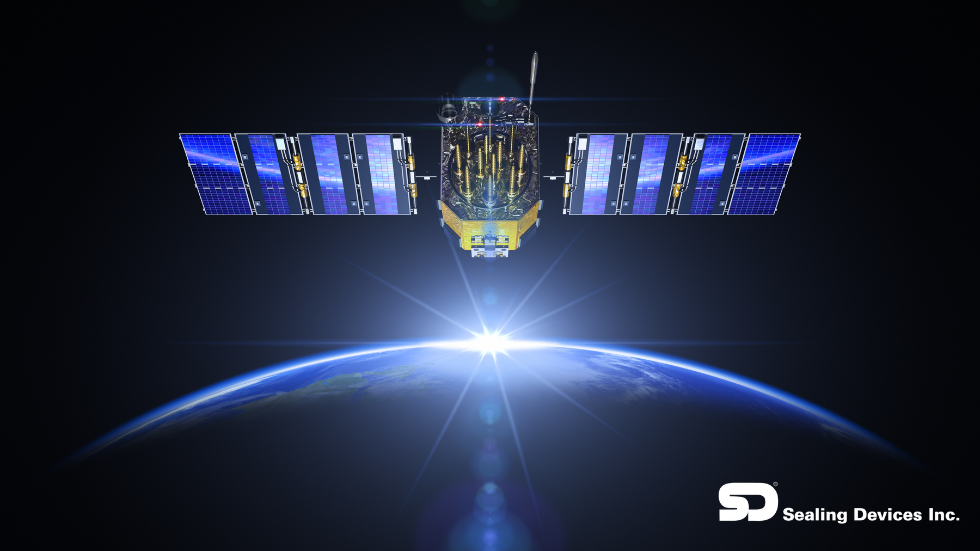
The space and satellite industry continues to accelerate, with major advances reshaping connectivity, defense communications, and data applications. In 2026, new services are moving from pilot to product, constellations are scaling, and regulatory pressure is increasing around orbital debris and end-of-life disposal. At Sealing Devices, we stay ahead of these changes to support aerospace and satellite programs with high-performance sealing, gasketing, and shielding solutions designed for extreme environments.
1) Direct-to-Device (D2D) Satellite Connectivity is Moving from “Wow” to Workflow
Direct-to-device satellite connectivity is expanding quickly as carriers and satellite operators move beyond limited trials and into broader service rollouts. Messaging has been a key first step, and the next wave is focused on supporting more devices, more applications, and broader geographic coverage.
Sealing impact:
- More D2D-capable satellites and ground infrastructure increases demand for reliable sealing and environmental protection across electronics enclosures and payload hardware.
- Durable sealing materials help protect sensitive components from moisture, dust, and contamination during manufacturing, integration, and ground operations.
- Reliable sealing supports long-term performance where service continuity is critical for emergency communications and remote coverage.
2) Consolidation and Capacity Strategy are Reshaping the Commercial Satellite Landscape
Consolidation remains a defining theme as large operators combine capabilities to expand coverage, optimize fleets, and compete in a rapidly changing market. This creates new requirements for suppliers as portfolios evolve and programs scale.
Sealing impact:
- As fleets and services integrate, suppliers that can support multiple applications and configurations become more valuable.
- Consistent quality, documentation, and traceability help meet tighter requirements across integrated programs.
- Material and part standardization can improve availability and simplify procurement for multi-program environments.
3) Mega-Constellations Keep Expanding and Competition is Intensifying
Constellations continue to scale as global broadband demand grows and new deployments add capacity. The pace of launches and satellite production is pushing supply chains to deliver repeatable quality, shorter lead times, and reliable components at volume.
Sealing impact:
- High-volume satellite manufacturing increases the need for repeatable, production-ready sealing solutions that maintain performance across tight tolerances.
- Sealing and gasketing solutions support environmental protection for ground handling, transport, and pre-launch integration.
- Components must handle vibration, shock, and thermal cycling without compromising integrity.
4) Optical and Laser Communications are Advancing, with More In-Space Networking
Laser communications and optical inter-satellite links are gaining momentum as networks pursue higher bandwidth and more resilient routing. This trend is also driving interest in new terminal designs and tighter integration between satellites, aircraft, and ground systems.
Sealing impact:
- Optical terminals and precision payloads benefit from sealing that protects against contamination and supports stable operation.
- Thermal cycling and vacuum conditions demand materials that maintain compression and performance over long duty cycles.
- Shielding and gasketing solutions can support electronics protection and enclosure integrity for mission-critical hardware.
5) Defense Demand for Resilient, Hybrid Space Networks is Growing
Government and defense organizations are increasingly focused on resilient, proliferated architectures and hybrid approaches that incorporate commercial capabilities. This is influencing how systems are designed, how quickly they are fielded, and how suppliers support production and sustainment.
Sealing impact:
- Mission reliability requirements elevate the importance of robust sealing, gasketing, and protective materials.
- Programs often require strong documentation, consistency, and quality controls across lots and builds.
- Materials and assemblies must perform under harsh conditions while supporting maintainability and repeatability.
6) Space Sustainability and Orbital Debris Rules are Raising the Bar
Orbital debris mitigation and end-of-life requirements continue to tighten, pushing manufacturers to improve reliability, reduce failure risk, and demonstrate responsible disposal planning. These expectations influence satellite design, materials, and lifecycle considerations.
Sealing impact:
- Reliable sealing helps reduce failure modes related to contamination, leakage, or environmental exposure.
- Long-life materials can support extended mission duration and stable performance throughout the satellite lifecycle.
- Quality-driven sealing solutions help improve overall system reliability, supporting sustainability goals and compliance planning.
How Sealing Devices Supports the Evolving Space Industry
As space and satellite technology advances, Sealing Devices supports aerospace programs with sealing and protection solutions designed for harsh environments, thermal cycling, and mission-critical reliability. Our team helps customers identify materials and components that align with application requirements and program expectations.
Need support for a space or satellite application? Contact Sealing Devices to discuss your environment, performance needs, and timeline.