
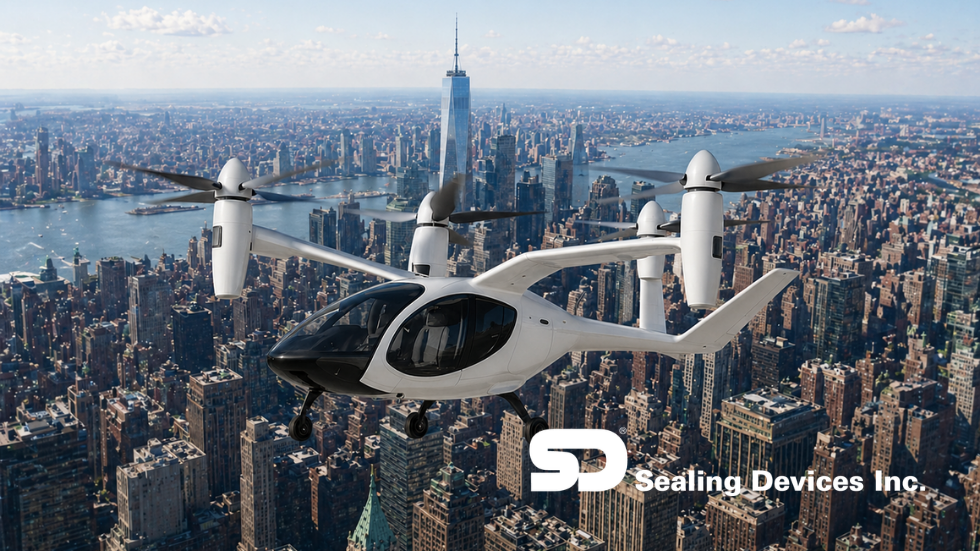
Electric vertical takeoff and landing aircraft, commonly known as eVTOLs, are reshaping the future of advanced urban air mobility. These aircraft combine electric propulsion, lightweight structures, high-performance batteries, advanced electronics, and rotor-based lift systems into compact platforms designed for efficient, reliable flight.
As eVTOL programs move from concept to certification and production, every material decision matters. Seals, gaskets, protective vents, foams, tapes, and thermal materials may seem like small components, but they play an important role in protecting critical systems from moisture, dust, pressure changes, vibration, thermal cycling, flame risk, and environmental exposure.
For engineers, the challenge is not just sealing an enclosure. It is choosing materials and components that support long-term performance while meeting the weight, safety, reliability, and production requirements of aerospace applications.
Why eVTOL Applications Create Unique Sealing and Venting Challenges
eVTOL aircraft bring together design challenges from aerospace, electric vehicles, rotorcraft, and high-reliability electronics. Components must be lightweight, durable, compact, and able to perform through demanding operating conditions.
Sealing and venting solutions may need to account for:
- Ingress protection for batteries, sensors, avionics, and electronics
- Pressure equalization for sealed enclosures
- Vibration and shock from rotors, motors, landing loads, and flight transitions
- Thermal and altitude cycling
- Flame, smoke, and safety requirements
- UV, ozone, moisture, and weather exposure
- Weight optimization to support range and payload
- Noise, buzz, squeak, and rattle control
- Long-term compression and sealing performance
In an eVTOL aircraft, a gasket may need to do more than keep contaminants out. It may also need to absorb vibration, maintain compression, support flame performance, reduce noise, or protect sensitive electronics from environmental stress.
Key Sealing and Venting Applications in eVTOL Aircraft
Battery Enclosure Seals and Vents
Battery systems are one of the most critical areas of eVTOL design. These systems must be protected from moisture, dust, vibration, pressure changes, and thermal stress while supporting consistent electrical and mechanical performance.
Battery enclosure sealing solutions may include custom gaskets, compression pads, cushioning materials, environmental seals, protective vents, thermal interface materials, and insulating components. These parts help protect battery cells, modules, electronics, and enclosure assemblies from operating conditions that could impact safety or reliability.
In eVTOL battery applications, sealing and venting materials may support:
- Battery enclosure gasketing
- Environmental sealing
- Pressure equalization
- Cell compression management
- Vibration isolation
- Thermal interface bonding
- Electrical insulation
- Flame-rated barriers or insulation
- Solid-state and pouch cell battery designs
Battery sealing should be considered early in the design process. Compression targets, enclosure geometry, closure force, material thickness, vent placement, thermal expansion, adhesive requirements, and production method can all influence performance.
Protective Venting for Pressure Equalization
Sealed enclosures help protect sensitive components from water, dust, dirt, and other contaminants. However, fully sealed enclosures can also trap pressure. As temperature, altitude, and environmental conditions change, pressure differentials can stress seals, gaskets, and enclosure walls.
Protective vents help sealed enclosures breathe while maintaining environmental protection. By allowing air to move in and out of an enclosure, vents can help equalize pressure, reduce condensation risk, and protect sensitive components from damage caused by pressure buildup.
In eVTOL aircraft, protective vents may be used in:
- Avionics enclosures
- Battery-adjacent electronics
- Sensor housings
- Camera systems
- Exterior lighting assemblies
- Communications equipment
- Power electronics
- Ruggedized control modules
- Charging system enclosures
GORE® Protective Vents are one option for applications where electronics and enclosures need pressure equalization along with protection from environmental contaminants. When paired with the right gasket or enclosure seal, protective vents can help improve reliability in systems exposed to changing altitude, temperature, moisture, and weather conditions.
For a deeper technical explanation, read our related article: How GORE® Protective Vents Work.
Vibration Isolation and Shock Protection
eVTOL aircraft experience vibration from rotors, electric motors, propulsion systems, landing events, and flight transitions. Sensitive electronics, sensors, cameras, batteries, displays, and control modules may require cushioning or isolation to reduce mechanical stress.
Vibration-focused sealing and cushioning components may include:
- Sensor and camera isolation pads
- PCB cushioning
- Battery pack cushioning
- Rotor-adjacent vibration control materials
- Interior enclosure seals
- Cabin noise reduction materials
- Buzz, squeak, and rattle control components
- Foam pads for electronics and structural interfaces
PORON® polyurethane foams and BISCO® silicone foams are often considered for applications that require cushioning, vibration damping, gasketing, or long-term compression performance. These materials can be fabricated into custom pads, gaskets, gap fillers, and seals based on the application requirements.
Reducing vibration is not only about comfort. It can also help protect electronics, maintain sensor accuracy, reduce fatigue, and support the long-term reliability of critical systems.
Interior Sealing, Gap Filling, and Cabin Comfort
Interior eVTOL applications may require sealing and gap filling solutions that support passenger comfort, sound control, flame performance, and consistent assembly. These applications may not be exposed to the same conditions as exterior seals, but they still require careful material selection.
Interior sealing and gap filling applications may include:
- Floor panel sealing
- Cargo bin gap fillers
- Cabin enclosure seals
- Seating and noise reduction materials
- Interior electronics gasketing
- Wire and cable sealing
- Bellow seals
- Flexible sealing interfaces
- Buzz, squeak, and rattle control
For passenger-facing areas, engineers may need to balance softness, compression force, flame performance, durability, abrasion resistance, ease of installation, and long-term appearance. Custom-fabricated sponge and foam gasket materials can help fill gaps, reduce movement, improve fit, and support a quieter cabin environment.
Exterior Sealing for Weather, UV, and Environmental Exposure
Exterior eVTOL seals may be exposed to rain, dust, humidity, sunlight, ozone, temperature swings, pressure changes, and cleaning chemicals. These components must maintain sealing performance through repeated flight cycles and changing environmental conditions.
Exterior sealing applications may include:
- Door and hatch gaskets
- Access panel seals
- Exterior electronics gaskets
- Lighting seals
- Antenna gaskets
- Sensor housing seals
- Inspection panel gaskets
- Battery enclosure environmental seals
- Hoses and duct sealing interfaces
- Weather-exposed gap fillers
BISCO® silicone materials are commonly considered for demanding gasketing and cushioning applications because of their temperature stability, compression set resistance, and available flame-rated options. Depending on the design, silicone foams, polyurethane foams, elastomers, pressure-sensitive adhesives, and protective vents may all play a role in maintaining exterior system reliability.
For complex geometries, form-in-place gaskets can also support precision sealing where traditional cut gaskets may not be the best fit.
Thermal Management and Stress Decoupling
Electric aircraft rely on batteries, power electronics, motors, inverters, controllers, sensors, and charging systems. These components generate heat and may experience expansion, contraction, and thermal cycling during operation.
Sealing and thermal materials may need to support:
- Heat transfer
- Thermal insulation
- Thermal cycling resistance
- Compression stability
- Electrical insulation
- Adhesive bonding
- Substrate movement
- Hot spot management
- Flame performance
Thermal management materials, including thermally conductive pads, thermally conductive adhesives, and thermal interface materials, may help move heat away from sensitive components while reducing stress caused by movement, vibration, or expansion. In high-reliability eVTOL applications, these materials should be evaluated as part of the broader system design rather than as isolated components.
EMI Shielding for Sensitive Electronics
eVTOL aircraft rely on electronic systems for propulsion control, navigation, communication, monitoring, sensing, and safety-related functions. As electronics become more compact and power-dense, electromagnetic interference can become a design concern.
EMI shielding materials may help protect sensitive electronics from interference while supporting enclosure sealing requirements. Depending on the application, solutions may include conductive elastomers, EMI gaskets, conductive adhesives, conductive form-in-place gaskets, and other shielding materials designed for ruggedized electronic systems.
For enclosures that require both environmental sealing and EMI protection, electrically conductive form-in-place gaskets may be an option.
Material Considerations for eVTOL Seals, Gaskets, Foams, and Vents
There is no single material that works for every eVTOL sealing application. A material used for an interior gap filler may not be appropriate for a battery enclosure, exterior access panel, avionics housing, or high-heat electronics assembly.
When selecting materials for eVTOL sealing and venting, engineers should evaluate:
- Operating temperature range
- Compression set and stress relaxation
- Closure force
- Ingress protection requirements
- Pressure and altitude cycling
- UV, ozone, moisture, and weather exposure
- Flame, smoke, and toxicity requirements
- Electrical insulation needs
- Thermal conductivity or thermal isolation needs
- Vibration and shock performance
- Adhesive backing or lamination requirements
- Weight limitations
- Prototype and production scalability
Material options may include Rogers PORON® polyurethane foams, Rogers BISCO® silicone foams, thermal interface materials, adhesives and tapes, GORE® Protective Vents, EMI shielding materials, and other custom-fabricated sealing components.
Why Work with Sealing Devices for eVTOL Sealing and Venting?
eVTOL programs require suppliers who understand aerospace expectations, material performance, documentation, quality requirements, and the need to move efficiently from prototype to production.
Sealing Devices supports customers with custom sealing, venting, gasketing, cushioning, EMI shielding, thermal management, and fabricated material solutions for demanding industries. Our Quality Management Systems are certified to AS9100D and ISO 9001:2015 standards, and Sealing Devices is ITAR registered.
As a Rogers Preferred Converter, Sealing Devices helps engineers evaluate and fabricate high-performance materials for aerospace and advanced mobility applications. Our capabilities include:
- Precision die cutting
- Waterjet cutting
- Laser cutting
- Slitting
- Lamination
- Molding
- Cleanroom converting
- Form-in-place gasketing
- Custom adhesive lamination
- Rapid prototyping
- Short runs
- Automated production
Sealing Devices can support eVTOL programs with:
- Battery enclosure seals
- Custom environmental gaskets
- Protective venting solutions
- PORON® and BISCO® fabricated components
- Vibration isolation pads
- Cushioning and sound-control materials
- Interior and exterior enclosure seals
- EMI shielding materials
- Thermal interface materials
- Adhesive-backed seals and laminated components
- Form-in-place gasketing
- Prototype through production support
Build Sealing and Venting into the Design Early
In eVTOL aircraft, seals and vents are not finishing details. They can influence enclosure reliability, battery performance, electronics protection, thermal management, passenger comfort, maintenance intervals, and long-term safety.
The best time to evaluate sealing and venting is early in the design process, before enclosure geometry, compression targets, adhesive interfaces, vent placement, and validation plans are finalized.
Whether you are designing battery enclosures, avionics housings, sensor assemblies, exterior access panels, cabin components, or thermal management systems, Sealing Devices can help identify sealing and venting solutions that support your eVTOL program from concept to production.
Need help selecting materials for an eVTOL application?
Talk with Sealing Devices’ Applications Engineering team about aerospace-ready sealing, venting, gasketing, cushioning, EMI shielding, and thermal management solutions designed for advanced air mobility applications.